

Why Do High-Traffic Roads Require Different Asphalt Mixes?
November 1, 2026
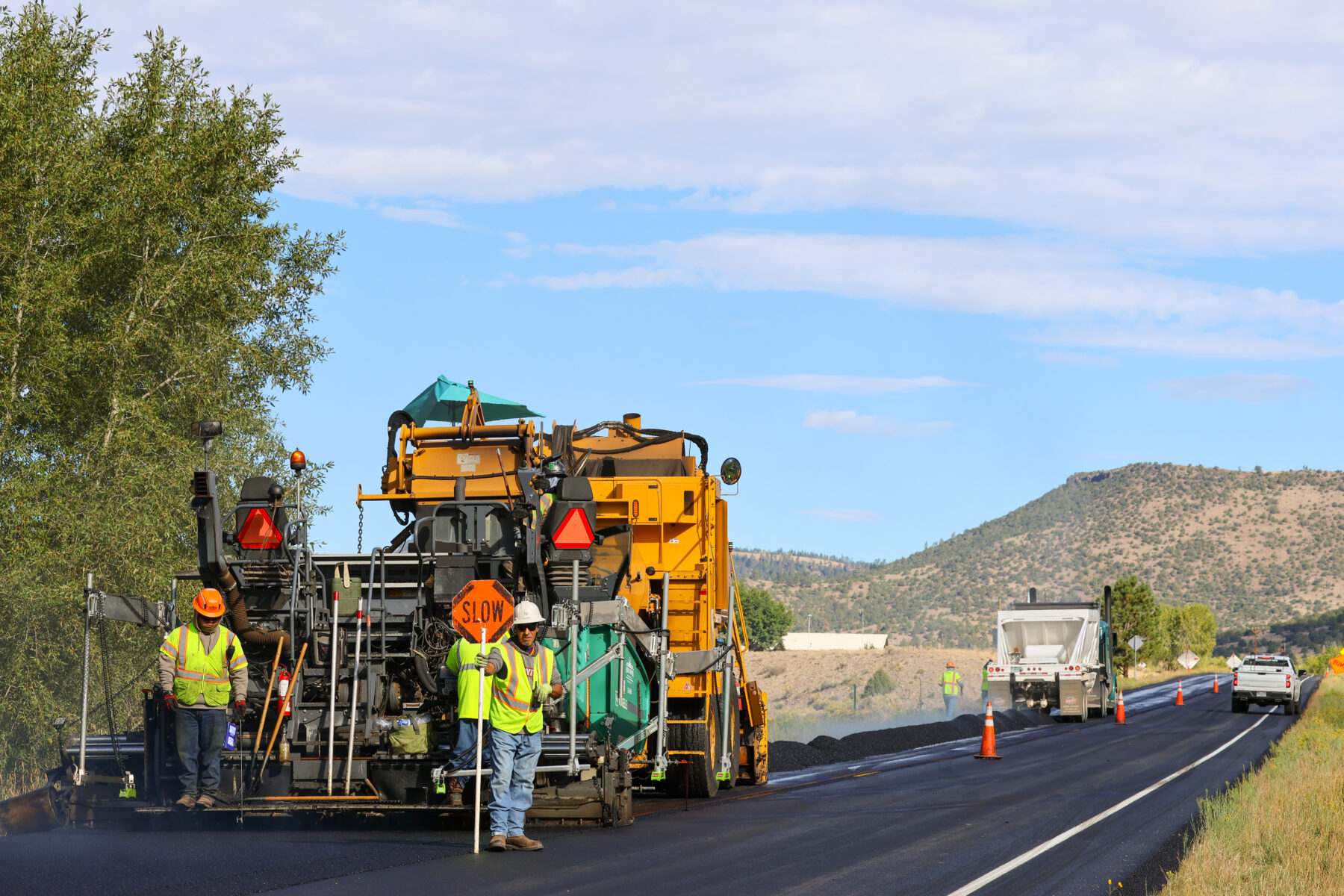
Asphalt mix design changes with traffic conditions, so the mix used on one road may not be the best fit for another. Heavy truck traffic, repeated braking, turning movements, and temperature extremes all affect how pavement performs over time. A mix that works well on a busy interstate, intersection, or industrial route may be designed differently from one intended for a neighborhood street or other lower-traffic area.
How Is Traffic Measured for an Asphalt Mix?
Traffic for an asphalt mix is measured in equivalent single axle loads, or ESALs, a unit that converts every passing vehicle into repetitions of one standard 18,000-pound axle. Pavement wear climbs much faster than axle weight does, so heavy axles count for far more than their weight alone suggests. A fully loaded tractor-trailer can register about 3 ESALs on a single pass, while a loaded passenger van registers about 0.003.
That gap is why a road’s truck count drives mix selection far more than its car count. Designers project the total ESALs a pavement will carry across its design life, then place the road in a traffic category that sets the rest of the mix requirements. A road expected to carry fewer than 300,000 ESALs and one expected to carry more than 30 million sit at opposite ends of that scale.
What Makes a High-Traffic Asphalt Mix Different?
Once a road lands in the upper traffic categories, a high-traffic asphalt mix changes in two places, the stone structure and the compaction target set in the lab. Angular crushed gravel with fractured faces locks together into a stone skeleton that carries wheel loads through particle contact, so heavier traffic calls for a higher share of crushed stone in the blend. Rounded particles tend to roll and shift under repeated truck tires, and that movement shows up as ruts in the wheel paths.
Lab compaction follows the same traffic scale. Mix designers compact test samples with a set number of gyrations, a figure that rises from 50 for the lightest category to 125 for the heaviest. More gyrations produce a denser, stiffer mix that usually carries somewhat less binder, and that stiffness resists the deep, repeated pressure of loaded axles. The busiest interstate-level routes sometimes go a step further with stone matrix asphalt, a surface mix that relies almost entirely on stone-on-stone contact to resist rutting.
Asphalt Mixes for Intersections and Slow Traffic
Beyond the total truck count, asphalt mixes at intersections and on slow uphill climbs carry loads that stay in one place longer, as trucks brake and pull away from the same stretch of pavement. Asphalt softens as it warms. A slow wheel presses into warm pavement long enough to push the mix sideways, leaving ruts in the wheel path and shoving ridges at the stop line.
The fix for slow traffic sits mostly in the binder. Every asphalt binder carries a performance grade with two numbers, the hottest and coldest pavement temperatures it is rated to handle. General guidance calls for raising the high-temperature grade one step for slow-moving or standing traffic, and sometimes two steps when heavy truck volume and slow speeds combine on the same road.
Climate decides the low-temperature number. In a high-desert climate where summer pavement runs hot and winter nights fall well below freezing, the binder has to stay stiff under a truck idling at a July stoplight and still flex without cracking in January. Polymer-modified binders are commonly used to cover a temperature range that wide.
What Asphalt Mix Fits a Low-Traffic Street?
At the opposite end of the traffic scale, a low-traffic street or parking lot generally needs a finer asphalt mix with a little more binder, because sun and weather age that pavement faster than wheel loads wear it down. A stiff, lean highway mix placed on a quiet cul-de-sac tends to dry out and ravel before it ever ruts. Loose stone along the surface and fine cracking across the whole area are the usual signs.
Lower-traffic hot mix asphalt is compacted to fewer gyrations in the lab, often 50 or 75, which leaves room for a thicker film of binder around each stone. That film seals the surface against water and slows the oxidation that turns aged asphalt brittle and gray. Residential streets and parking lots often use a smaller top-size stone as well, which leaves a tighter, smoother finish.
How Traffic Shapes the Asphalt Mix
Selecting an asphalt mix involves more than accounting for the number of vehicles using a road. Axle loads, vehicle speeds, temperature extremes, and pavement design all influence how the finished surface performs. A mix designed for heavy truck traffic must resist repeated loading and deformation, while lower-traffic applications may place greater emphasis on durability and surface performance. Matching those requirements during mix design helps reduce premature deterioration and supports a longer pavement service life.
Four Corners Materials produces hot mix, warm mix, and cold mix asphalt from computer-controlled plants, with certified technicians testing each mix for uniformity. Contact Four Corners Materials to discuss asphalt options for an upcoming paving project.