
Stone Dust vs. Screenings: Choosing the Right Base Material for Heavy-Load Applications
November 26, 2025
A strong foundation defines the success of any heavy-load project. From industrial pavements to equipment yards and roadways, the selected base material determines how well the surface manages stress, compaction, and environmental impact. Among the most widely used fine base materials are stone dust and screenings, two aggregates that share similar origins but behave differently when applied. Knowing how each performs and where it excels is essential to building long-lasting structural stability.
Understanding the Material Differences
Stone dust and screenings are both byproducts of crushed stone production, but their particle profiles distinguish how each interacts within a base system. Stone dust is the finest fraction produced during the crushing process, consisting primarily of rock powder with minimal coarser particles. This ultra-fine consistency allows it to compact tightly, forming a near-impermeable surface. However, while its density is an advantage for specific leveling applications, it can also restrict drainage and retain moisture when used beneath heavy loads.
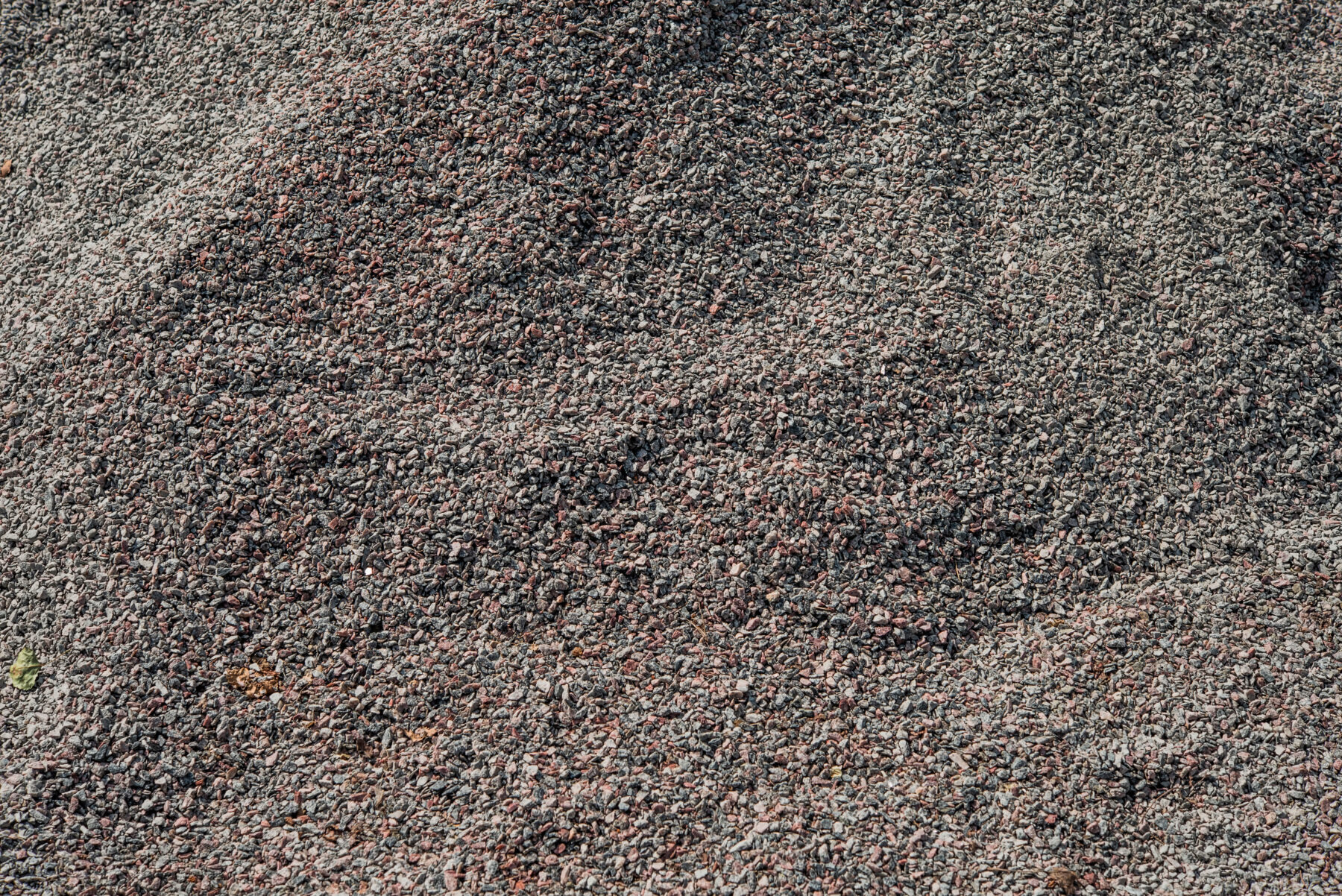
Screenings, by contrast, contain a broader range of particle sizes, typically including fine dust along with small angular fragments. This gradation improves interlock and drainage, enabling water to move through the material without compromising compaction. The slightly coarser texture also enhances stability, particularly when placed beneath concrete slabs, pavers, or asphalt layers expected to bear frequent or sustained pressure.
Performance Under Load
In heavy-load environments, the ability of a base material to distribute stress evenly determines surface longevity. Stone dust compacts into a dense layer that resists movement but can become brittle when subjected to repeated vibration or moisture cycles. This rigidity often leads to surface shifting or minor heaving when used directly beneath load-bearing slabs.
Screenings provide a more balanced response. Their mix of fines and small aggregates allows for dense compaction while maintaining enough permeability to reduce water accumulation. This prevents frost heave in cold climates and limits the softening that occurs when trapped moisture freezes or expands. For applications such as industrial driveways, parking lots, and equipment pads, this combination of stability and drainage makes screenings a preferred option.
Compaction and Workability Considerations
Ease of compaction directly influences installation efficiency and long-term strength. Stone dust requires precise moisture control to achieve optimal density, as it tends to compact irregularly when dry and form a slurry when oversaturated. This sensitivity can slow installation and introduce inconsistencies in base uniformity.
Screenings, with their slightly coarser texture, achieve consistent compaction with less moisture sensitivity. The angular particles lock together under mechanical pressure, producing a firm base with predictable performance. For large-scale projects where time, consistency, and durability align as priorities, screenings offer a dependable balance between strength and manageability.
Selecting the Right Material for the Job
Choosing between stone dust and screenings comes down to function. Stone dust is effective for leveling layers beneath concrete forms or filling small voids where tight compaction is the goal. Its fine texture creates a smooth surface ideal for achieving precision alignment. However, for structural bases exposed to traffic, vibration, or heavy machinery, screenings deliver the drainage capacity and structural integrity required to maintain performance over time.
A heavy-load surface is only as reliable as the base that supports it. The distinction between stone dust and screenings reflects more than just particle size, it defines how water moves, how weight is distributed, and how the structure responds to stress. By selecting the right material for each layer, engineers and contractors ensure that every load-bearing surface performs as designed, season after season. In the balance between density and drainage, screenings often emerge as the base material that reinforces strength from below, providing the stability that keeps industrial-grade surfaces solid, even under constant demand.