

Why Do Construction Projects Use Different Sizes of Aggregate?
October 1, 2026
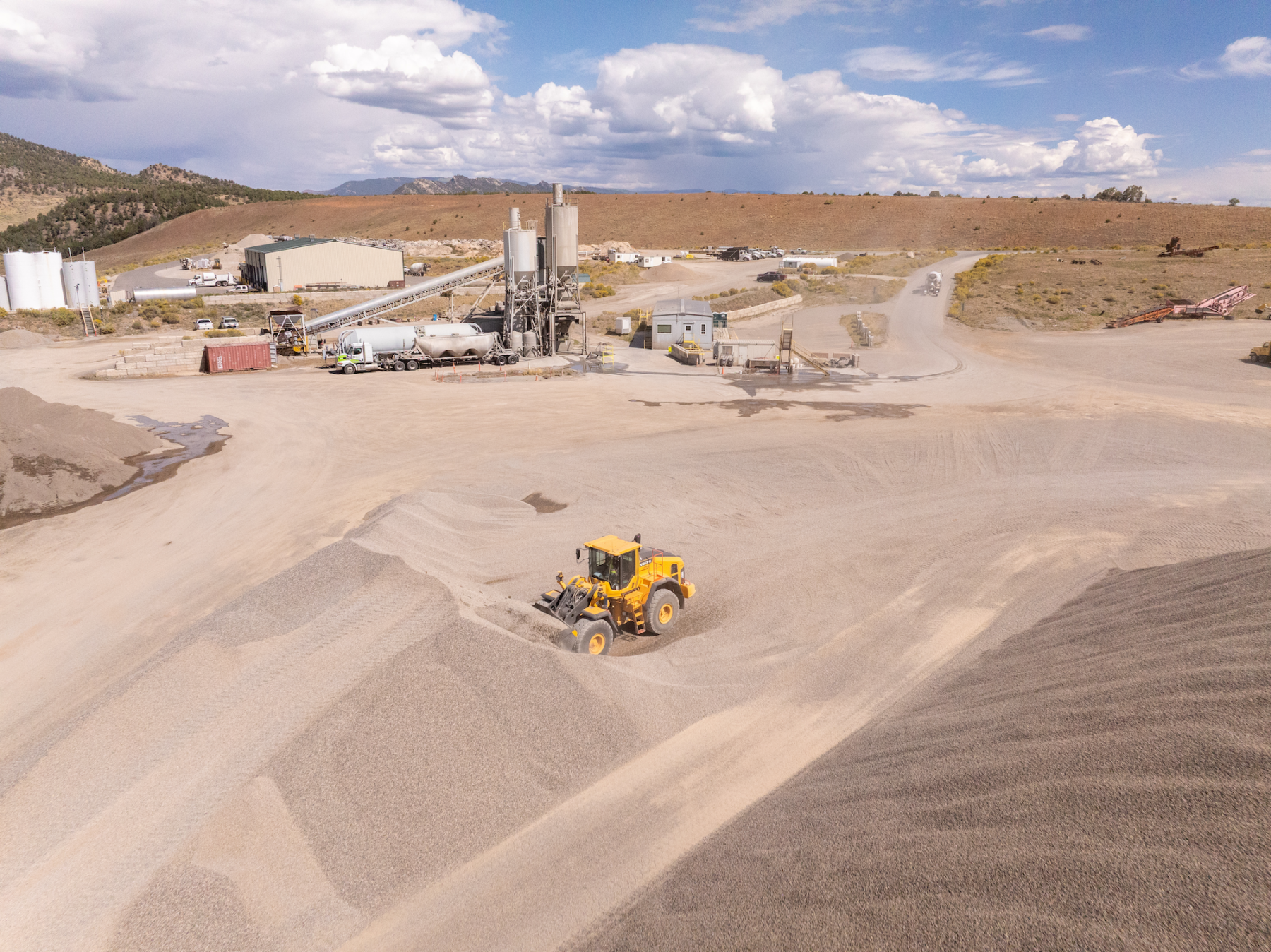
Construction projects use different sizes of aggregate because each application asks the material to do a different job. A road base needs particles that lock together under compaction, concrete needs a blend that balances strength with workability, and drainage needs open space for water to move freely. That’s why aggregate gets screened and graded into specific size ranges rather than treated as one interchangeable material.
Matching the right size to the right job protects the durability of the finished work.
What Size Aggregate Belongs Under a Roadway or Slab?
A base or subgrade layer carries the load above it down into the native soil. It does that through particle-to-particle contact, not through any binder holding it together. Larger, angular material such as crushed gravel or a blended road base locks together under compaction in a way finer, rounder material cannot.
That’s why a road base or building pad calls for a mixed range of particle sizes rather than one uniform size. Pit run, essentially unscreened material straight from the source, often supplies that same mixed range without extra processing.
Gradation also controls how water moves through the layer. A base with too much fine material compacts tightly but holds water near the surface. Where the ground cycles through freeze and thaw each winter, trapped moisture expands with every freeze and pushes a base out of shape before a single vehicle drives over it. A coarser, more open gradation lets that water drain through and away from the subgrade instead.
Sites that see repeated freeze-thaw cycles need a coarser blended base so water can escape before it expands and shifts the layer.
How Do Coarse and Fine Aggregate Work in Concrete?
One blended range works for a base layer. Concrete asks two distinct sizes to do separate jobs within the same mix. Coarse aggregate, generally larger crushed stone, makes up the bulk of the mix’s volume. Fine aggregate, washed sand, fills the smaller gaps that remain between those larger particles.
The less open space left between particles, the less cement paste is needed to fill it. That keeps the mix workable without diluting the water-to-cement ratio that gives concrete its strength.
A mix with too little coarse aggregate relative to fine material needs more paste to fill the extra void space. That extra paste is what drives shrinkage cracking as the slab cures. Sizing and proportioning both aggregates before they reach the mixer keeps the finished slab strong and stable.
How Does Aggregate Size Change Between Asphalt Layers?
Asphalt makes a size decision based on where a layer sits in the pavement structure. Every mix is identified in part by its nominal maximum aggregate size: the largest stone that makes up a meaningful share of the blend. That number changes depending on whether the layer is structural or a finished surface.
A binder layer sits thicker and buried under a surface course. It can carry a larger maximum aggregate size because there’s enough thickness for those larger stones to sit fully embedded in the mat.
A surface layer works differently. It’s poured thin, and it’s the layer tires actually contact. A maximum aggregate size meant for a thick structural layer would leave large stones sitting too close to the surface. That telegraphs through as a rough, uneven ride and breaks loose at the edges over time. A paving crew sizes the surface course down accordingly, keeping the mat thin enough to finish smoothly while still locking together under repeated traffic loads.
What Aggregate Size Works Best for Drainage?
Base layers, concrete and asphalt all ask aggregate to lock together under load. Drainage and bedding applications ask the opposite: movement rather than compaction. A drainage trench, a French drain or a bed under a section of pipe works best filled with a narrow range of larger stone, cobble rock among them, that leaves plenty of open space between particles for water to pass through.
Fine material defeats that purpose fast. A bed packed with too much stone dust compacts tightly enough to resist drainage almost entirely. The same tradeoff shows up when choosing between stone dust and screenings for a heavy-load base, where screenings’ coarser, more varied blend holds enough structure to carry equipment loads without sealing off drainage.
Filling a drainage trench with material that carries too many fines is a frequent misstep. That material compacts, holds water and stops draining within a season.
Frequently Asked Questions
Does a Larger Aggregate Size Always Mean a Better Mix?
No. A larger aggregate size adds bulk and interlock, but how well a mix holds together comes from how tightly the paste bonds to each particle and how densely the particles pack. An oversized aggregate dropped into a mix that wasn’t designed around it can leave gaps a smaller, properly graded particle would have filled. The right size is the one matched to the mix design and the application, not simply the largest option on the yard.
How Is Aggregate Size Classified?
Aggregate size is classified by passing a sample through a stack of screens with progressively smaller openings, a process called a sieve analysis. The percentage of material that passes through or stays on each screen determines the aggregate’s gradation. That gradation, not a single measurement, is what gets written into a project’s material specification.
Does Aggregate Size Affect Project Cost?
Yes, mainly through processing rather than the raw material itself. A specification aggregate screened to a tight range costs more to produce than pit run pulled straight from the source, because more material has to be sorted out to hit that range. Choosing a tighter gradation than a job needs adds cost without adding benefit, so matching size to the actual requirement keeps a budget in line.
What Decides the Right Aggregate for a Project?
Every application asks aggregate to do something different, and the size has to match that demand. Getting the gradation right before the order goes in is what keeps the finished work from failing at the layer that matters most.
Four Corners Materials matches that gradation to the specific job at hand. Request a quote to get started.