
How to Protect Concrete Surfaces from Heavy Summer Traffic and Use
June 17, 2026
Concrete surfaces face a punishing stretch between June and September. Surface temperatures can routinely climb past 130 degrees, and monsoon rains arrive without warning. Add to that the impact of traffic on an array of concrete surfaces, and the combination puts steady pressure on every square inch of finished concrete. Protecting that investment is a multi-step endeavor, all aimed at keeping ready mixed concrete intact under heavy summer demand.
Heat and Load Working Against the Slab
Surface temperature drives most of the problems concrete sees during peak summer months. Once a slab reaches 110 to 140 degrees on the wear face, thermal expansion forces aggregate particles to push outward against the cement paste, creating fine surface crazing and, in severe cases, edge spalling at joints. Repeated truck axle passes amplify that movement by flexing the slab against its base, which is where soft spots in the subgrade begin to show up as cracks tracking from one joint to the next.
Above the slab, dry desert air pulls water out of the mix faster than internal hydration can use it, leaving the top eighth of an inch underdeveloped and prone to scaling once tire scuff and point loads arrive. Wind speed above 10 mph during placement multiplies evaporation rates, which is why placement timing carries as much weight as mix design during the summer window.
Mix Selection Built Around Summer Conditions
A ready mixed concrete order placed for a July pour reads differently than the same slab specified in March. Lower water-to-cement ratios near 0.42 limit early bleed water and reduce shrinkage cracking under intense sun, while a Type II cement blend slows hydration heat in the first 24 hours. Fly ash or slag replacement at 20 to 30 percent of the cementitious content further tempers the internal temperature curve, which keeps the slab from gaining and losing heat too quickly during the first afternoon cycle.
Aggregate gradation also shifts under summer conditions. A well-graded blend of coarse and fine particles reduces the paste content the mix needs, which lowers shrinkage potential and tightens the surface against abrasion. Air entrainment between 4.5 and 7.5 percent rounds out the design, holding the slab against monsoon freeze cycles that can roll through high-desert nights even in late summer.
Placement and Finishing Inside the Heat Window
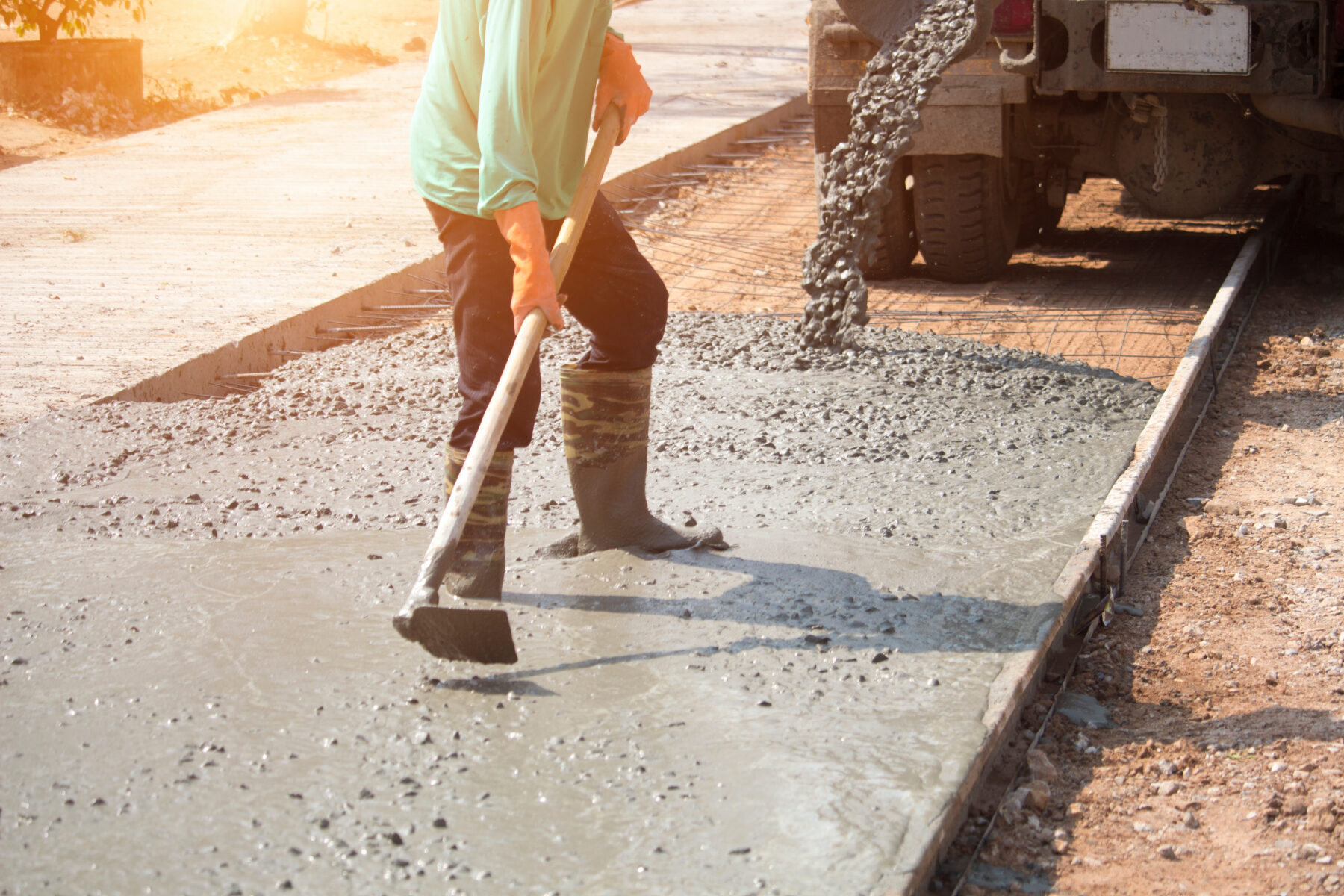
Concrete trucks scheduled for early morning placement, ideally before 8 a.m., land mix on grade while ambient temperatures sit below 75 degrees and subgrade moisture remains intact. Pre-wetting the subgrade the evening before stops the base from pulling water out of the bottom of the slab, which is the most common cause of plastic shrinkage cracking on summer pours. Evaporation retarders sprayed on the surface between bull-floating and final troweling keep the wear face workable without adding water back into the mix, which would weaken the surface paste.
Finishing crews also adjust the timing of float and trowel passes during hot weather. Closing the surface too early traps bleed water beneath the densified top layer and produces blistering once the slab is loaded, while waiting too long lets the surface stiffen past the point where it can be tightened. A jobsite slump check and surface temperature reading every 30 minutes keeps the finishing window honest.
Curing Methods That Hold Through Peak Heat
Hydration continues for weeks after placement, but the first 7 days dictate how the slab handles its first summer of traffic. Wet curing with burlap and soaker hoses remains the most effective method in arid climates, holding surface moisture in place while internal cement reactions develop the matrix that resists abrasion. White-pigmented curing compounds reflect solar gain and slow moisture loss when wet methods are not practical, which matters on larger commercial pads where continuous water coverage is hard to maintain.
A protective sealer follows the curing window. Penetrating siloxane or silane products applied between 28 and 60 days lock out chloride intrusion from de-icing residue and monsoon moisture, while a topical acrylic adds a sacrificial layer against tire polymer transfer and oil drips. A fresh seal coat every two to three years keeps the slab surface tight against UV exposure and the abrasive sand carried in by high-desert wind.
Joint Maintenance and Repair Under Active Loads
Control joints saw cut between 6 and 18 hours after placement give the slab a planned path to relieve shrinkage stress, which keeps random cracking off the wear face. Joint sealant applied once the slab reaches full cure flexes with thermal movement and blocks debris from packing into the cut, which would otherwise spall the joint edges under heavy wheel loads. Inspection every spring catches deteriorated sealant before the first hot stretch of the season puts the joints under maximum movement.
At the first sign of distress, polymer-modified patching compounds bond tightly to the host slab and accept traffic within hours. Polyurethane crack injections seal active cracks against moisture without restricting movement, which keeps debris and water out of the working layer below. Pavement preservation handled on this schedule keeps the original slab in service for decades rather than triggering a full replacement.
Concrete placed and protected with summer conditions in mind holds its line through monsoon storms and heavy traffic loads across the high-desert region. Four Corners Materials supplies the ready mixed concrete and field expertise to specify the right mix design and placement schedule for any summer project. Contact the local team to request a quote or schedule a pre-pour consultation before the next pour goes on the calendar.